How to Get Recommended by ChatGPT | AI SEO Toronto

How to Get Your Business Recommended by ChatGPT and Google AI in Toronto and GTA
A practical guide to AI search visibility, local SEO, trusted listings and useful content
Is Your Business Visible When Customers Ask AI for Recommendations?
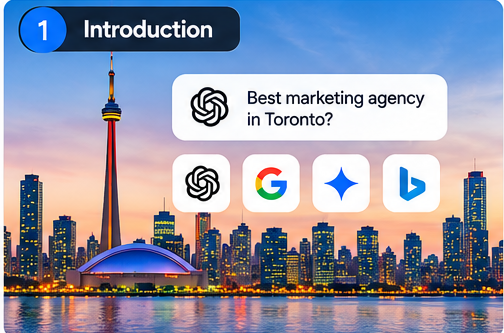
Imagine a potential customer asking ChatGPT, Google AI Mode or Gemini: Who is the best digital marketing agency in Toronto?
Which SEO company should I hire in the GTA? Can you recommend a reliable roofing contractor near me? What are the best Greek restaurants in Scarborough?
Instead of scrolling through pages of traditional search results, the customer may receive a conversational answer containing business recommendations, supporting information and links to relevant websites.
If your business is missing from those answers, you could be missing an opportunity to reach customers who are actively researching products and services.
This is where AI search visibility becomes important. For businesses in Toronto and the Greater Toronto Area (GTA), improving visibility across traditional search engines and AI-powered discovery platforms is becoming an important part of a modern digital marketing strategy.
At Menta Digital Marketing, we believe the foundation remains the same: understand your audience, create useful content, establish trust, maintain accurate business information and make your website easy to discover.
The goal is not to trick an AI system into recommending your business. It is to build a credible online presence that helps search engines, AI systems and potential customers understand what you do, who you serve and why your business deserves consideration.
1. What Is AI Search Visibility?
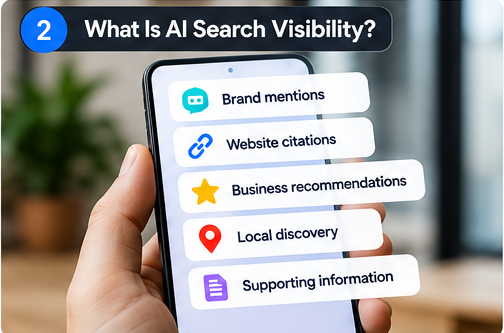
AI search visibility refers to how often and in what context a business or website appears in AI-generated search experiences.
These include Google's AI Overviews and AI Mode, ChatGPT search, Microsoft Copilot and other platforms that use online information to answer questions.
Brand mentions: an AI-generated answer names your business.
Website citations: an AI-generated answer links to one of your web pages.
Business recommendations: a platform identifies your business as a potential option for a particular need.
Local discovery: business information helps a customer find a relevant nearby service or location.
Supporting information: your website, reviews, case studies or other published sources help explain your services, expertise or reputation.
These outcomes are related, but they are not identical. A brand mention does not necessarily include a clickable link, and a website citation does not automatically mean the AI system recommends your business.
AI search optimization, also called answer engine optimization (AEO) or generative engine optimization (GEO), focuses on improving the clarity, accessibility, relevance and credibility of your online presence.
Google's published guidance says existing SEO fundamentals remain important for its AI search features. No special markup or tactic guarantees inclusion.
2. How Do ChatGPT, Google AI and Other Platforms Discover Businesses?
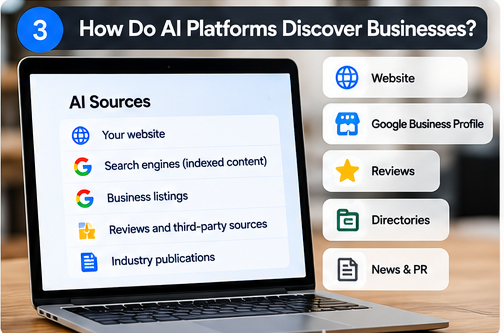
Your website
Your website is one of the most important places to explain your business in your own words. It should clearly communicate:
What your business does and which services you provide.
Which industries and customers you serve.
Where you operate and how customers can contact you.
What makes your offering different and what evidence supports your claims.
Create dedicated service pages instead of relying on one general page to describe everything.
A Toronto marketing agency, for example, may need separate pages for local SEO, Google Ads management, website development and AI search optimization.
Search engines and indexed content
Search engines help people discover websites and can supply links that appear in AI-powered search experiences.
If important pages are blocked from crawling, unavailable to search engines or difficult to discover through internal links, your business may lose opportunities for visibility.
Check robots.txt, XML sitemaps, canonical tags, indexability, redirects, internal links and page rendering.
Business listings and third-party sources
Your website is only one part of your online presence. Business directories, review platforms, local publications, industry websites, professional associations and credible third-party references can help people understand and verify your business.
These sources do not guarantee an AI recommendation, but they are important parts of a trustworthy digital presence.
3. Seven Ways to Improve Your Business's AI Search Visibility

1. Build helpful service pages around real customer needs
Review your most important commercial pages. Does each page explain the service clearly, answer questions customers ask before hiring a provider, and include relevant examples or limitations?
Avoid generic pages that repeat the same marketing claims. Include local information naturally where it reflects your actual service area.
2. Publish original research, case studies and real examples
Publish case studies explaining a client's challenge, strategy and outcome; original surveys; before-and-after project examples; expert commentary; practical checklists; or data-driven comparisons.
Explain the context behind results and never imply one client's outcome guarantees the same result for everyone.
3. Make your expertise easy to verify
Support expertise with clear author information, relevant experience, original analysis, client examples and sources.
Include author biographies, publication dates, testimonials published with permission, project details, measurable outcomes and accurate contact information.
4. Strengthen your Google Business Profile
Maintain the correct business name, address or eligible service-area configuration, categories, services, hours, website link, phone number and authentic photos. Keep information current.
Google identifies relevance, distance and prominence as key local ranking factors, but no agency can guarantee a particular ranking.
5. Build a consistent presence on relevant review platforms
Use platforms your customers actually rely on, such as Google, Yelp, Bing and industry-specific directories.
Encourage honest feedback from real customers, respond professionally and follow each platform's policies. Never buy reviews or offer incentives for positive reviews.
6. Create content that answers specific questions
Answer real customer questions, such as how much local SEO costs in Toronto, how to choose an SEO agency, how long SEO takes, or how restaurants can improve Google visibility.
Use descriptive headings, clear paragraphs, examples and reliable sources.
7. Monitor AI visibility and improve based on evidence
Track relevant questions across the platforms that matter. Record brand mentions, citations, competitors and sources.
Combine this with search performance, referral traffic and qualified leads. A published article does not automatically make a business visible in AI answers.
4. Which Content Formats Are Most Useful for AI Search Visibility?

There is no single content format that guarantees an AI recommendation.
The right format depends on the question being asked and the information a customer needs. Several formats are useful because they answer common research and decision-making questions clearly.
Listicles and curated lists
Examples include '10 Questions to Ask Before Hiring an SEO Agency in Toronto', '7 Ways to Improve Your Business's AI Search Visibility' and '8 Local SEO Mistakes Toronto Businesses Should Avoid'. Make the items meaningful and supported by useful explanations.
If you rank providers, disclose selection criteria, methodology and commercial relationships. Do not fabricate rankings.
How-to guides and step-by-step tutorials
Examples include 'How to Optimize a Google Business Profile', 'How to Check Whether Your Website Appears in Google AI Overviews' and 'How to Track AI Search Referrals in Analytics'. Explain prerequisites, steps, common mistakes and how to verify results.
Comparison articles
Examples include 'Traditional SEO vs. AI SEO', 'ChatGPT Search vs. Google AI Mode', 'SEO Agency vs. In-House SEO Team' and 'Google Business Profile vs. Yelp'. Use transparent criteria and explain limitations. Avoid presenting a sales pitch as an objective comparison.
Case studies and explanatory guides
Case studies should explain the original challenge, work performed, measurement period, results and limitations. Definition guides should explain concepts accurately, distinguish established facts from emerging practices, and provide practical next steps.
Choose the content format that best serves the reader's intent. Do not publish listicles, comparison tables or FAQ sections merely because someone claims AI systems always prefer them.
5. How to Optimize Your Google Business Profile for AI and Local Search
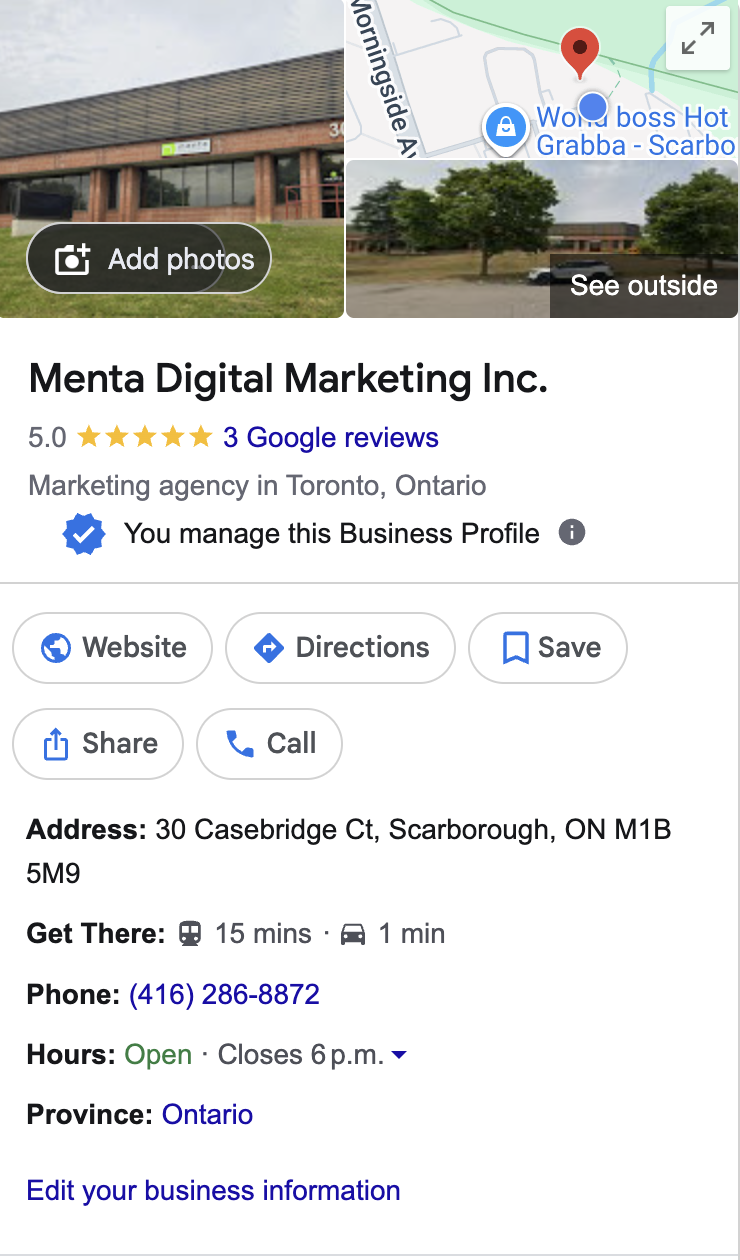
Business information: confirm name, address, service area, phone number, website and hours.
Categories and services: choose categories that accurately describe the business and list only services you provide.
Reviews: request honest feedback from real customers and respond professionally.
Photos and updates: publish authentic images and keep information current.
Website connection: link to the most relevant landing page.
Local relevance: describe the areas you genuinely serve without claiming locations that do not exist.
Google's local ranking guidance identifies relevance, distance and prominence as key factors.
A complete profile can help Google understand a business, but adding more keywords does not guarantee a top ranking.
6. Yelp, Bing Places and Other Business Directories

Yelp
Yelp can be relevant for restaurants, home services and other consumer-facing local businesses.
Keep your listing accurate, respond professionally to feedback and follow Yelp's policies for soliciting reviews.
Evaluate whether it reaches your audience and generates meaningful enquiries.
Bing Places for Business
Claim and verify your Bing Places listing where eligible.
Check categories, contact details, hours, location and website.
Bing Webmaster Tools also offers an AI Performance report that can show cited pages and grounding queries in supported AI experiences.
Industry-specific directories
Consider credible directories, professional associations, local chambers of commerce and specialist platforms relevant to your industry. Choose sources based on relevance, reputation and audience. Avoid low-quality directory submissions made solely to generate links.
Review listings periodically for outdated information, duplicate profiles and incorrect contact details. Core facts should agree across platforms even if the wording differs.
7. Should You Create an llms.txt File for AI Search?

The proposed llms.txt convention is a text-file format intended to help language models understand a website's key information and resources.
Some site owners experiment with /llms.txt to summarize important pages.
However, llms.txt is not a confirmed requirement for appearing in Google AI Overviews or AI Mode.
Google's published guidance says website owners do not need new machine-readable files, AI text files or special markup to appear in its AI search features.
Treat llms.txt as an optional experiment, not a replacement for core SEO.
Prioritize these activities first:
Ensure important pages can be crawled and indexed.
Publish useful service pages and original content.
Create clear internal links between related pages.
Maintain accurate business information.
Use appropriate structured data that matches visible content.
Monitor search performance and AI visibility with available tools.
If you choose to implement llms.txt, keep it accurate and consistent with the actual website.
It cannot override crawling, indexing or ranking systems.
8. Check Your Google Search Console Search Generative AI Setting
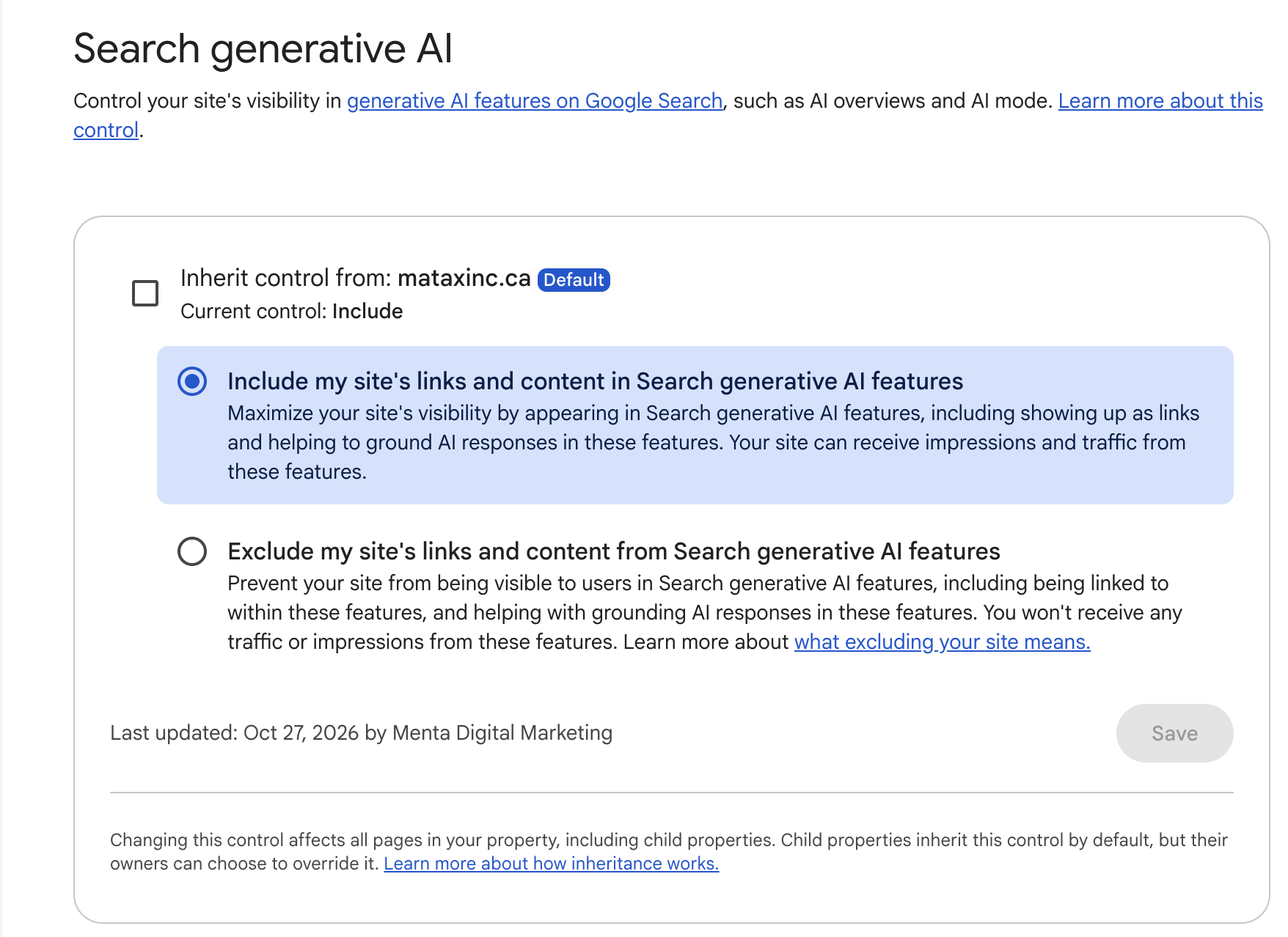
Google Search Console includes a Search generative AI control for eligible website properties.
The control allows site owners to manage whether their content is included in supported generative AI features in Google Search.
How to check the setting
Open Google Search Console and select the correct website property.
Open Settings and find Search generative AI.
Review the current inclusion setting.
Confirm that it matches your website's visibility preferences.
Save changes if you modify the selection.
For a business that wants to be discovered through Google AI Overviews and AI Mode, the inclusion setting is generally appropriate.
Inclusion does not guarantee that a page will be indexed, shown, cited or recommended. It does not replace useful content and technical SEO.
Also audit robots.txt, page-level directives, canonical tags, sitemap, internal linking and important page templates. Confirm that key service pages and articles are accessible and eligible for search indexing.
Google Search Central: AI features and your website
9. How to Monitor AI Visibility and Understand the Data
AI visibility tools can help businesses understand whether their brand or website appears in AI-generated answers.
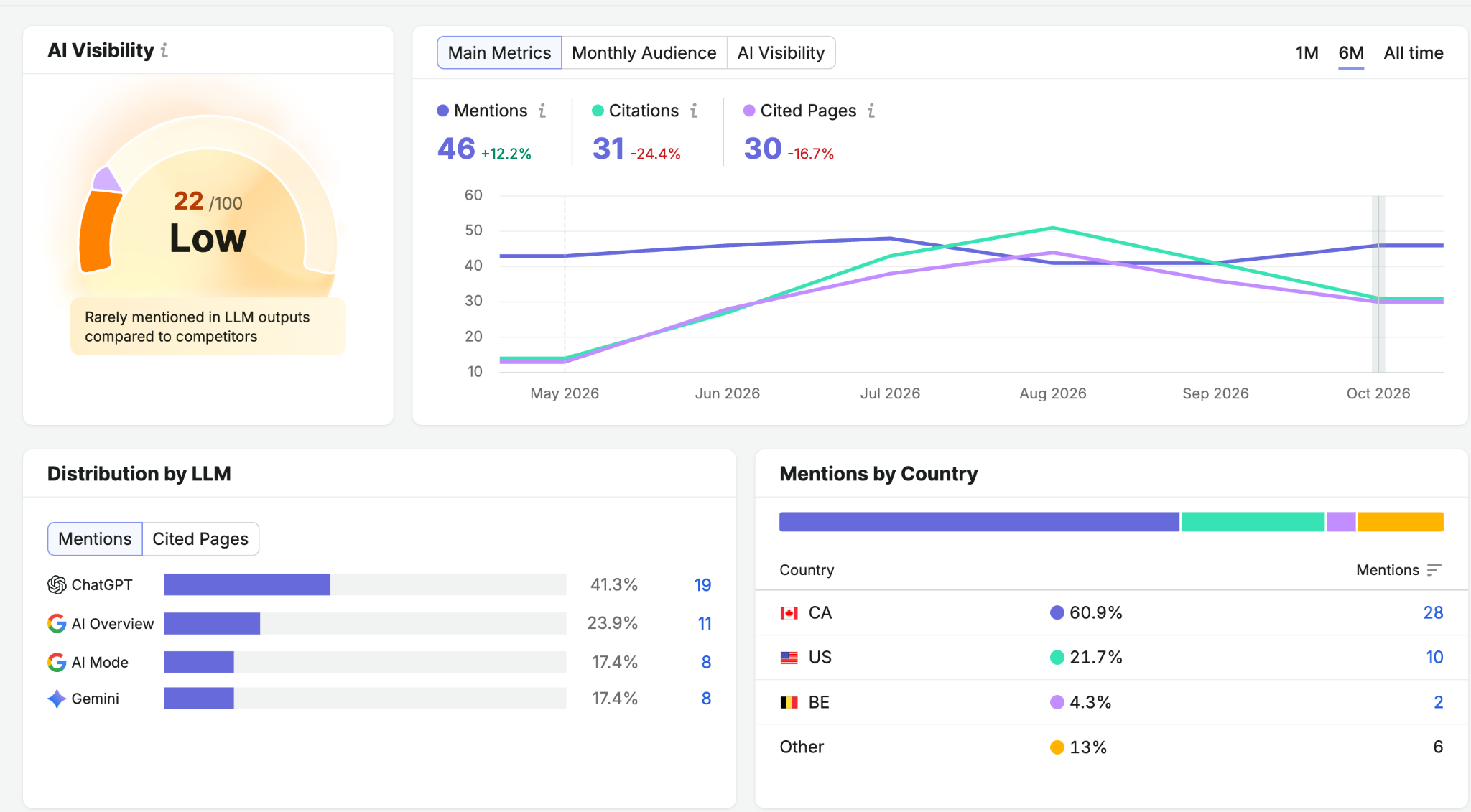
Different tools measure different things, so understand the metrics before drawing conclusions.
In this example, mentions have increased while citations and cited pages have declined over the displayed comparison period.
That is a useful observation, but it does not establish why the changes occurred.
More mentions do not necessarily mean more website visits, and fewer citations do not automatically mean rankings have fallen. The score is tool-specific, not a universal AI ranking score.
The scale and totals differ substantially from the first screenshot. Do not compare them directly unless the underlying websites, reporting scope, prompts, date ranges and metric definitions are known.
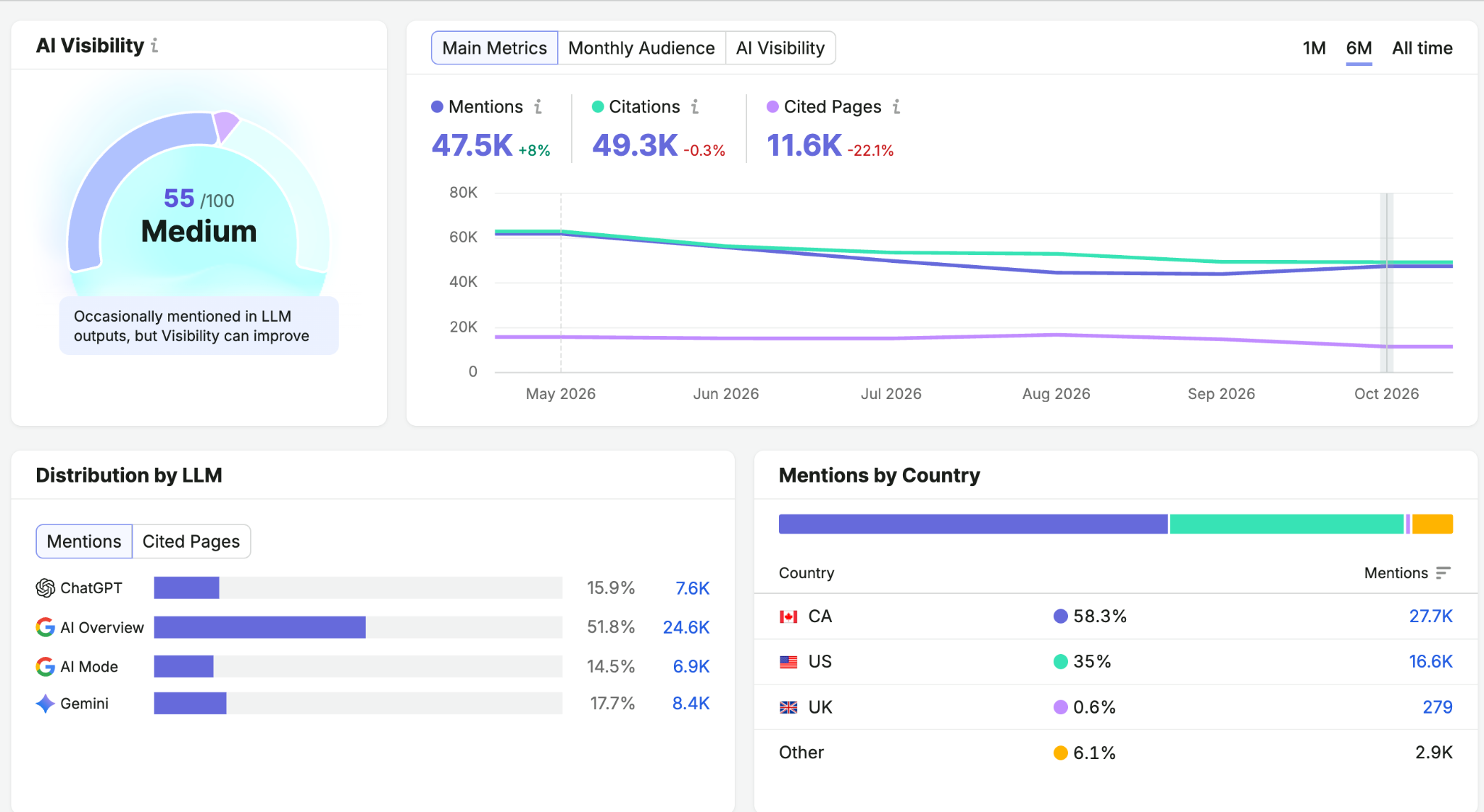
Which metrics should you track?
Metric
What it tells you
What it does not prove
Brand mentions
How often your brand appears in tracked answers
That users clicked or converted
Website citations
How often pages are cited or linked
That your site ranks first
Cited pages
Which pages appear as sources
That every important page is visible
Tracked prompt coverage
Which questions return your brand
That all customer questions behave the same
Referral traffic
Visits attributed to AI platforms where identifiable
That every AI-assisted visit is captured
Qualified leads
Whether visibility contributes to enquiries
That AI visibility alone caused the lead
Use these indicators together. A rise in AI mentions is more commercially meaningful when it coincides with relevant website visits, stronger engagement or qualified enquiries.
10. Use Google Search Console and Bing Webmaster Tools Alongside AI Tracking

Google Search Console
Use Search Console to monitor indexing, technical issues, queries, impressions, clicks and organic performance.
Review important service pages and blog posts, identify queries that reveal content gaps, and improve pages that receive impressions but few clicks.
Bing Webmaster Tools
Bing Webmaster Tools offers conventional search performance reports as well as an AI Performance report. It can show cited pages, grounding queries and changes in citation activity across supported Microsoft Copilot, Bing AI and partner experiences.
It does not reveal every AI response or prove why a page was cited.
Bing Webmaster Tools: AI Performance
Google Analytics
Use Google Analytics 4 to measure relevant visits, engagement and conversions. Where referral data identifies an AI platform, monitor that traffic separately. Establish conversion events for calls, form submissions and other meaningful business outcomes. Evaluate lead quality rather than treating every AI referral as a qualified lead.
11. Why Traditional SEO Still Matters for AI Search
AI search optimization should not replace traditional SEO. Core activities include:
Keyword research based on customer intent.
Search-friendly titles and meta descriptions.
Clear heading structures and relevant internal links.
Crawlable and indexable pages.
Useful, original content and accurate structured data.
Appropriate local SEO and mobile-friendly design.
Relevant backlinks and credible third-party references.
Ongoing performance measurement.
Structured data should accurately reflect visible content and follow relevant guidelines.
No special schema type guarantees AI recommendations. Adding irrelevant markup, creating unnecessary files or repeating keywords will not substitute for a strong website.
12. Local SEO for Toronto and the GTA: Should You Target Toronto or Scarborough?
For businesses serving the GTA, location targeting should reflect real service coverage and customer demand.
Toronto is useful for broad regional visibility, GTA communicates wider regional coverage, and Scarborough, North York, Etobicoke, Vaughan, Markham or Mississauga may be appropriate for specific local content.
Create local content when it provides genuine value, such as:
A project completed in that location.
A service-area explanation relevant to local customers.
Local regulations or practical considerations.
An original case study or location-specific customer questions.
Real testimonials or examples from the area.
Do not create a page for every city simply to insert location keywords.
A page should exist because it contains meaningful local evidence, not merely because a neighbourhood name is another keyword.
Publishing content for a location does not create a physical presence or guarantee visibility there.
13. Common AI SEO Mistakes to Avoid
Expecting instant recommendations
No legitimate SEO agency can guarantee that ChatGPT, Gemini or Google AI will recommend a particular business.
Publishing generic articles at scale
Prioritize accuracy, original insights and relevance over publication volume.
Treating llms.txt as a ranking shortcut
It is optional and is not a confirmed requirement for Google's AI search features.
Buying reviews or manufacturing mentions
Fake reviews and misleading endorsements can damage trust and violate platform policies.
Ignoring website fundamentals
Fix blocked pages, broken links, inaccurate content and poor navigation before investing heavily in more content.
Measuring visibility without business outcomes
Mentions and citations are useful indicators, but they are not revenue. Connect reporting to qualified leads wherever practical.
14. A Practical 30-Day AI Search Visibility Plan
Week 1: Audit the foundation
Review Google Search Console and Bing Webmaster Tools.
Check indexing, robots.txt, sitemap and canonical tags.
Confirm the Search generative AI inclusion setting.
Audit Google Business Profile and relevant directories.
Record current AI mentions, citations and tracked queries.
Week 2: Improve the most important pages
Update the homepage and priority service pages.
Clarify services, geographic coverage and customer value.
Add original examples, case studies or supporting evidence.
Improve internal links and correct inaccurate business information.
Week 3: Publish helpful content and strengthen reputation
Publish one substantial pillar article.
Develop supporting how-to, comparison or case-study content.
Improve relevant local business listings.
Establish a compliant process for requesting honest customer reviews.
Identify credible industry publications and partnership opportunities.
Week 4: Measure and refine
Review changes in organic search performance.
Check pages appearing in available AI citation reports.
Test a consistent set of relevant customer questions.
Review referral traffic and qualified enquiries.
Prioritize the next content and technical improvements based on evidence.
AI visibility can change independently of website updates, so use this month as a structured starting point rather than a promise of immediate results.
15. How Menta Digital Marketing Can Help
At Menta Digital Marketing, we bring together SEO, local search optimization, content strategy, web development and digital marketing to help businesses improve their online presence.
Our approach begins with understanding your business, your customers and the questions people ask before making a purchasing decision.
Depending on your goals, a project may include:
Technical SEO and indexing audits.
Local SEO and Google Business Profile optimization.
AI search visibility assessments.
Service-page and content strategy.
Internal linking and structured data reviews.
Review and directory consistency audits.
Google Search Console and Bing Webmaster Tools analysis.
Conversion tracking and lead-quality measurement.
The aim is not to promise control over an AI platform's answers.
It is to build a stronger, more discoverable and more credible online presence that supports long-term growth.
Want to improve your business's visibility in Google Search and AI-powered discovery?
Frequently Asked Questions About AI Search Optimization
How do I get my business recommended by ChatGPT?
Build a clear and trustworthy online presence.
Publish useful service pages, provide accurate business information, demonstrate real expertise, maintain relevant listings and earn genuine reviews and credible third-party references.
Monitor whether your brand and website appear in relevant answers, but understand that no tactic guarantees a recommendation.
Does AI SEO replace traditional SEO?
No. Traditional SEO remains an important foundation. Search engines still need to discover and understand your pages, and users need accurate, relevant information. AI SEO should complement technical SEO, content quality, local optimization and reputation building.
Does Google require an llms.txt file?
No. Google's published guidance says an llms.txt file is not required to appear in Google AI Overviews or AI Mode. Treat it as an optional experiment, not a replacement for established SEO work.
Does Google Search Console have an AI search setting?
Yes. Search Console provides a Search generative AI control for supported generative AI features in Google Search. Inclusion does not guarantee indexing, citations or recommendations.
Do Google reviews help with AI recommendations?
Genuine reviews help potential customers evaluate a business and contribute to its broader online reputation. They do not guarantee that an AI platform will recommend a business.
Should I optimize for Toronto, the GTA or Scarborough?
Choose locations that reflect your real service area and target demand. Toronto can be the broad primary target, GTA can describe regional coverage, and Scarborough can support focused local content where it is genuinely relevant.
How can I check whether AI platforms mention my business?
Test relevant customer questions and record mentions, links, sources and competitors. Use Search Console, Bing Webmaster Tools and suitable AI visibility platforms to monitor available data. Track referral traffic and qualified leads alongside mentions and citations.
How long does AI SEO take to work?
There is no universal timeline. Results depend on technical health, content quality, competition, authority, demand and platform behaviour. Treat AI visibility as an ongoing process of improvement and measurement.
Final Thoughts
AI-powered search is changing how people discover and evaluate businesses, but the fundamentals of a strong online presence remain familiar.
Businesses need accurate information, useful content, credible expertise, relevant local signals and websites that search engines can access and understand.
For companies in Toronto and the GTA, the best starting point is to strengthen these foundations, publish content that genuinely answers customer questions and measure whether those improvements lead to meaningful visibility and enquiries.
Official Resources
Google Search Central: AI features and your website
Google Search Central: Guide to optimizing for generative AI features
Google Search Console: Search generative AI control
Google Business Profile: Improve your local ranking
Bing Webmaster Tools: AI Performance